

You're in the fitting room, one hand on the zipper, the other checking the mirror because the dress looks different from the front than it does from the back. The front may feel safe and familiar, but the open back changes everything, suddenly the questions are practical, not dreamy. Will the neckline stay put, will your bra show, does the fabric hang cleanly, and is this right for the event you have in mind?
That reaction is exactly why robe dos nu femme deserves a slower, more careful look. The back cut isn't just a style detail, it's the decision that shapes support, comfort, fabric behavior, and how formal the dress feels on your body. If you treat the back opening as the starting point, the rest gets easier.
Table of Contents
- The Moment You Try On a Backless Dress
- Main Types of Open-Back Cuts Explained
- Why Halter Necklines Change the Fit
- Choosing the Right Bra for Every Back Style
- Matching Open-Back Dresses to the Right Occasion
- Caring for Satin and Delicate Evening Fabrics
- Putting It All Together Before You Buy
The Moment You Try On a Backless Dress
You step out of the fitting room and turn toward the mirror. From the front, the dress may look familiar. Then the open back changes the picture: your shoulders move, the fabric shifts, and the usual place for a bra strap disappears. A dress that looked simple on the hanger now asks practical questions about support, movement, and comfort.
What usually matters first
Start with four checks. Neckline security tells you whether the upper edge stays in place when you walk, sit, or raise your arms. Bust support affects whether you can wear the dress for several hours without adjusting it. Fabric drape shows whether the material falls smoothly or gathers around the opening. Occasion appropriateness helps you decide whether the amount of exposed skin suits the setting.
These checks connect to one decision: the shape of the back opening. A narrow opening may leave room for more conventional support, while a lower or wider cut can require built-in structure, adhesive support, or a different styling plan. The same choice also affects how carefully you must handle the fabric, since delicate material can reveal pulling, folds, or pressure marks.
Open-back dresses became recognizable in the 1920s and gained wider visibility in the 1930s as sun-tanning became fashionable. The style became associated with modernity, leisure, and bare-skin elegance rather than hidden structure backless dress history. By the late 1930s, Micheline Patton's appearance in a backless dress on BBC's Clothes-Line caused public complaints, demonstrating how striking the silhouette had become.
Why the back cut comes first
Treat the back opening like the frame of a window. Its width, depth, and edges determine what can sit behind it and how the dress moves around it. A low scoop, keyhole, halter, or fully open drape therefore leads to a different solution for neckline stability, bust support, and fabric care.
Choose the cut before shopping for accessories. One shape may sit neatly on your body and suit the event, while another may require constant adjusting even if you love its appearance in photos.
Practical rule: ask which back opening matches your body, your bra plan, and the occasion before asking whether you can wear an open-back dress.
Eveningwear offers plenty of variations, from lightly open backs to dramatic gowns. One industry estimate values the global evening gown market at USD 38.7 billion in 2025 and projects USD 59.2 billion by 2035, while another estimates the evening dress market at USD 1.7 billion in 2024 and forecasts USD 3.9 billion by 2033 evening gown market. With so many designs available, a dependable fit matters more than a broad label such as “backless.”
Main Types of Open-Back Cuts Explained
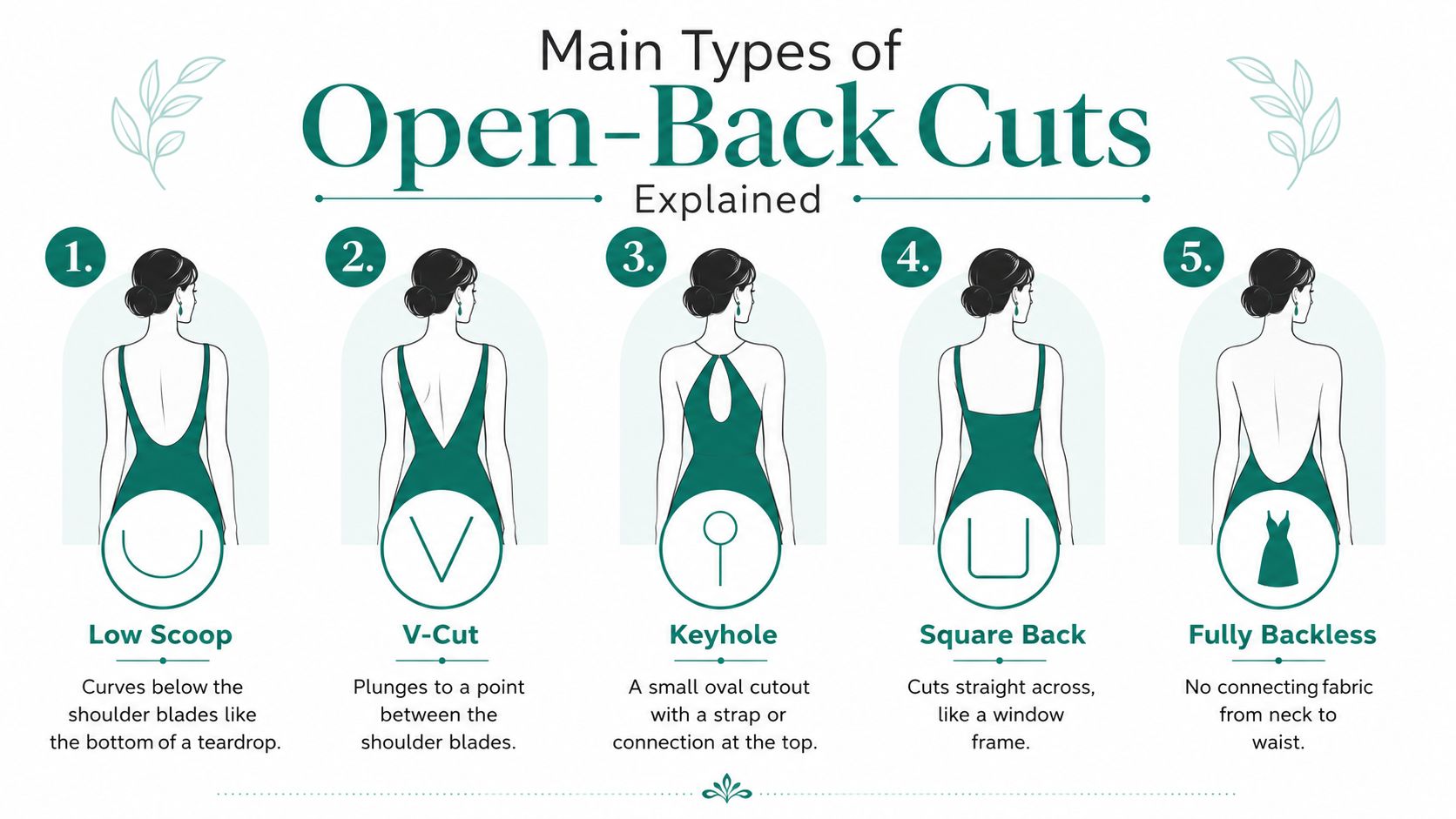
A good way to shop is to ignore the broad label “backless” and look at the actual cut. The opening can be shallow, narrow, plunging, framed, or almost fully bare, and each one changes what you need underneath.
The cuts you'll actually see
A low scoop curves below the shoulder blades like a shallow smile. It usually works best for everyday dinners, small parties, or wedding-guest outfits because it gives you openness without demanding a dramatic support solution. Medium straps or a built-in lining often feel enough here, and the fabric can be lighter without the whole dress losing its shape.
A keyhole cutout keeps a small framed opening in the center of the upper back. It feels modest but still decorative, which makes it useful when you want the back to be interesting without showing too much skin. This cut usually pairs well with a medium-weight fabric, because the shape needs enough body to stay neat.
A deep V-back drops toward the lower spine and creates the most formal, gown-like effect of the group. It looks best when the fabric has enough structure to hold the line, because a flimsy cloth can sag and make the cut look accidental rather than intentional. Thin straps or a narrow shoulder line often suit this shape better than thick bands.
The more engineered shapes
A multi-strap racer frames the back with horizontal or crossed bands instead of one big opening. That gives you visual interest and more built-in security, so it's a strong choice if you want movement without a completely exposed back. The strap layout usually works well in firmer fabrics that can support the geometry cleanly.
A fully backless drape leaves the back uncovered and lets the fabric fall from the sides. This is the most striking version, and it usually asks for the most planning underneath. It tends to work best in fabrics with some weight and flow, because the dress needs to look deliberate from every angle.
The more skin the cut reveals, the more the fabric and inner construction have to do.
Why Halter Necklines Change the Fit
A halter open-back dress behaves differently from a dress with shoulder straps because the support shifts upward. Instead of sharing load across both shoulders, the neckline takes more of the weight, which changes how the bodice sits and how the dress feels after a few hours.
What that means on your body
Smaller busts often like this structure because the lift can feel neat and flattering without much extra support. Fuller busts need more caution, because the neck can start to feel strained once the dress has been worn for a while. That doesn't mean halters are off-limits, it means the neckline has to be treated like a piece of engineering, not just a style choice.
Fabric weight matters here too. Lighter satin can pull at the tie point, which can make the neckline shift or feel less stable, while a more structured fabric holds the shape better and disguises strain. Technical garment guidance also points to reinforced neck straps and moderate-weight fabrics for open-back and halter styles, because the neck bears more load when the back is exposed technical garment guidance.
A small detail that changes the whole fit
Closure placement matters more than many shoppers expect. Halter dresses often fasten at the waist or hip instead of the back, which changes how you step into the dress and how the bodice settles once it's on. If the dress zips lower down, you should expect the fit to be judged by the bust, waist, and torso length together, not just the visible open back.
Fit rule: with a halter, the neck is doing part of the work that a shoulder strap would usually do, so the dress has to fit your bust cleanly before it can look elegant.
That's why halter styles often feel confident on the hanger but unpredictable in the fitting room. The right shape can be flattering and secure, but only if the neckline, fabric weight, and measurements are working together.
Choosing the Right Bra for Every Back Style
Support under an open-back dress is less about one universal “bra for backless dresses” and more about matching the support to the opening. The wrong solution can show from the back, flatten the front, or pull the dress out of shape.
A simple comparison
| Back Cut | Best Bra Solution | Bust Size Range |
|---|---|---|
| Deep U-cut | Low-back converter or adhesive cups | Small to medium, sometimes fuller busts with structured cups |
| Keyhole back | Multiway bra with low-back setting, or built-in lining | Small to medium |
| Illusion mesh panel | Convertible bra, bandeau, or lightly structured support | Small to medium, depending on neckline height |
| Fully backless plunge | Adhesive cups or nipple covers, sometimes built-in support | Small to medium, fuller busts need strong internal structure |
A low U-cut gives you the most room to hide a low-back converter. That works when the back opening dips, but not when it disappears completely. A keyhole back is often easier, because the small opening can still hide a lot of ordinary support if the straps sit low enough. An illusion mesh panel can look backless without really being backless, which makes it the most forgiving for a standard convertible bra.
Where support breaks down
The trouble starts when the dress is fully open and the bust is fuller. At that point, adhesive cups may help shape the front, but they don't always give enough lift for comfort over a long event. Recent guidance on open-back styling also notes that structured support matters more for fuller busts than generic strapless advice, which is exactly why one-size-fits-all suggestions tend to fail bra guidance for open-back dresses.
Try the bra under the actual dress before you commit to alterations. Once the support is in place, the neckline, waist placement, and back opening can all look slightly different.
If you're shopping online, a store's size guide and support details become useful. Mode, for example, highlights a satin evening dress with an open back, halter neckline, size guidance, and shipping information, which is the kind of setup that helps a buyer think through support before checkout.
Matching Open-Back Dresses to the Right Occasion
The same open-back shape can feel elegant or out of place depending on the event. Hemline, fabric weight, and how much skin the back shows all work together, so the smartest choice is the one that matches the room you're walking into.
Four common settings
A black-tie gala usually asks for a floor-length dress in crepe or satin. The fabric should feel smooth and substantial, and the back can be low or cut as long as the overall silhouette stays formal. Pair it with a higher heel and jewelry that doesn't compete with the open back, especially if the dress already has a dramatic neckline.
A wedding, whether you're a guest or the person getting married, often works best with a mid-length keyhole or illusion back. That gives the dress interest without letting the open back take over the whole look. A medium heel and restrained accessories help the outfit feel polished instead of loud.
A cocktail party gives you more freedom. A structured mini or fit-and-flare dress with an open back can look fresh and easy to move in, especially if you need to stand, sit, and dance in the same night. Here, the side seam and hemline matter as much as the back cut, because they affect how comfortable the dress feels in motion.
Daytime and warmer-weather events
A summer event or daytime gathering works well with a breezy cotton or linen backless sundress. The back opening can feel relaxed rather than formal, and the fabric should support that mood. Flat sandals, minimal jewelry, and a lighter bag keep the whole outfit in balance.
If you know you'll be dancing, choose a higher side seam and a cut that stays close to the body. If photos matter most, pick a back shape that frames the shoulder blades instead of dropping all the way to the lower back. That small choice changes how the dress reads in person and in pictures.
Caring for Satin and Delicate Evening Fabrics
An open-back dress exposes one large panel of fabric, so wrinkles, shine marks, and small stains show fast. Satin needs a gentler routine than expected, especially if the back is the main visual feature of the dress.
What to do before and after wear
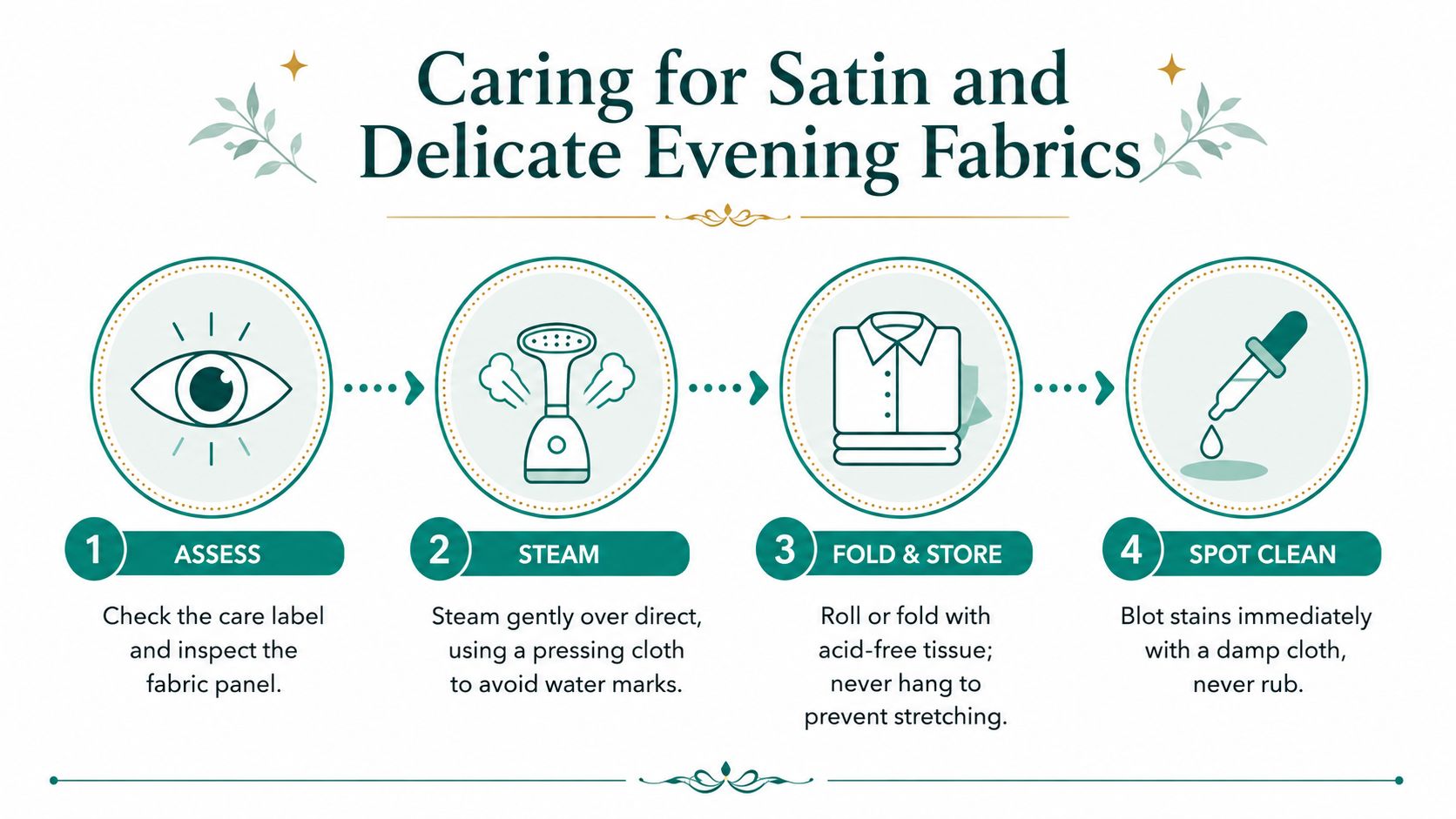
Steaming is the safest starting point for satin. Care guidance notes that steam relaxes satin fibers and helps remove wrinkles, while direct high heat can scorch the weave or leave permanent shine marks; practical ironing ranges are typically kept around 110 to 150°C with a press cloth and the garment turned inside out satin care guidance. For an open-back dress, that matters even more because the back panel is uninterrupted, so any mark is hard to miss.
Use a handheld steamer from a short distance and keep it moving. Let the dress dry fully on a hanger before wearing it, because a damp panel can lose its drape and sit badly at the seams. If makeup, perfume, or skin oil lands on the neckline or back opening, spot-clean it right away with a damp cloth rather than waiting for a full wash.
Storage that protects the shape
Padded hangers help keep shoulder shape and stop straps from digging in. Breathable garment bags are better than tight plastic covers, especially for satin and other delicate evening fabrics. If you're traveling, rolling the dress gently is usually safer than folding it sharply, because a backless panel can crease in a place that's hard to hide later.
Care rule: the more open the back, the less forgiving the fabric is, so finish it gently, store it lightly, and never press on the face of the satin without protection.
Putting It All Together Before You Buy
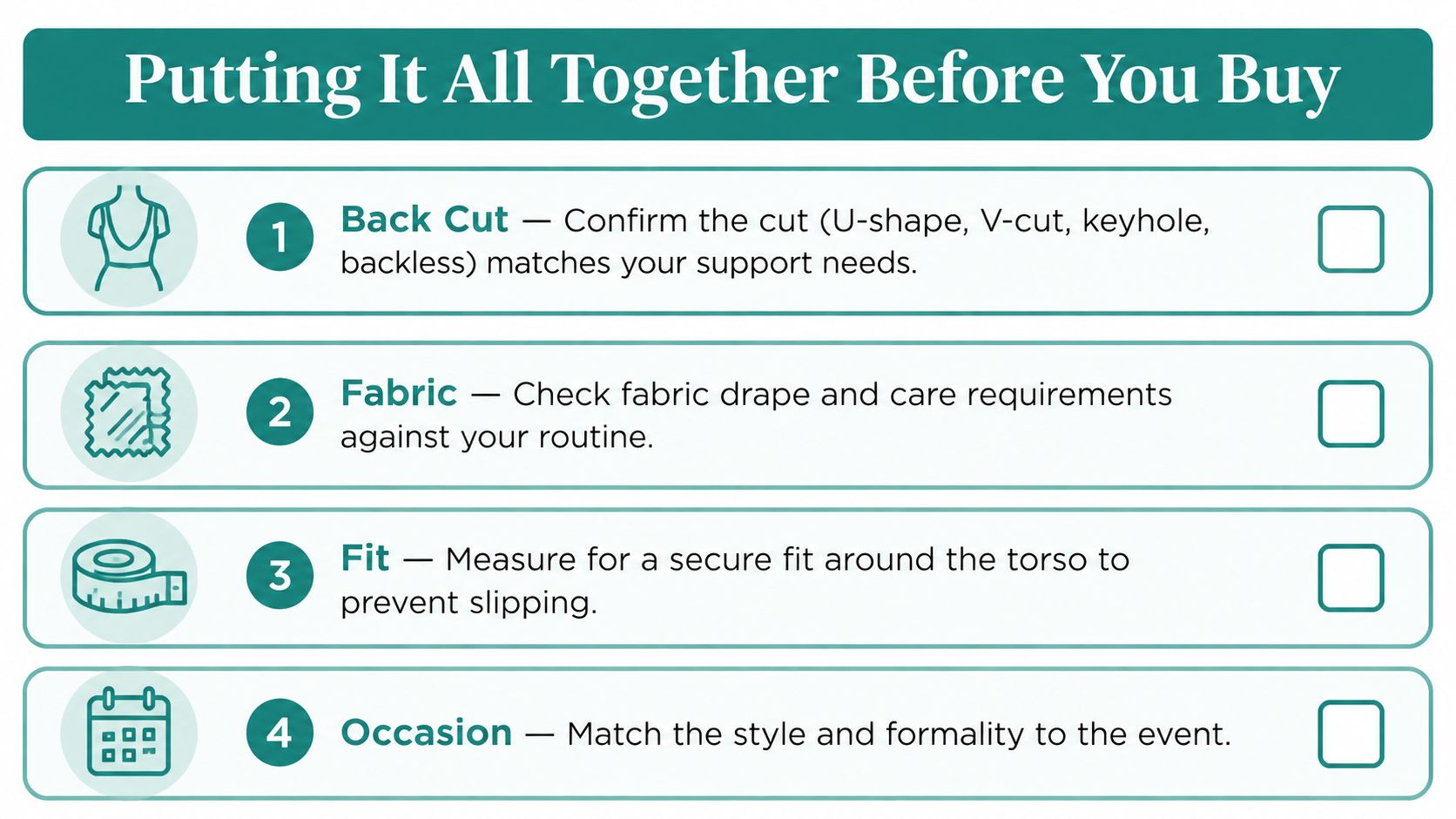
The easiest way to shop is to run the dress through four checks before you say yes. Start with the back cut, then judge the fabric, then confirm the fit, and finally test whether the style suits the occasion. That order keeps you from choosing a pretty dress that solves the wrong problem.
A quick pre-shopping check
- Back Cut: Confirm whether you're looking at a U-shape, V-cut, keyhole, or fully backless style, because each one changes support.
- Fabric: Check whether the dress has enough drape and structure for the way you plan to wear and care for it.
- Fit: Measure for a secure fit around the torso so the dress doesn't slip or twist once you move.
- Occasion: Match the formality of the dress to the event so the back opening feels intentional.
The last step is the one many people skip. Measure your back width at the bra band, write it beside the dress cut you want, and bring both to the fitting room or compare them against the size guide before you buy. That small habit turns a hopeful purchase into a deliberate one.
If you want a place to start, Mode offers a satin evening dress with an open back and halter neckline, plus size guidance and delivery details that make the purchase easier to judge in context. Visit Mode if you want to compare a real open-back option against the cut, support, and care checklist you've just built.
Made with the Outrank tool